Electric doors are accessible, secure and inclusive, particularly for people with disabilities. They are also complex, as electric doors can experience many different technological and mechanical issues. Due to this, Elite Security offers both repair and regular maintenance services for your electric doors, to ensure they remain fully operational.
Discover the wide range of electric doors available for installation as well as how to repair some of their most common issues.
Five Main Types of Electric Doors
Electric doors have become a staple in our lives. From our homes to our places of work, from airports and hospitals, most buildings have some type of electric doorway. Discover the five main types of electric doors we encounter daily.
Garage Doors:
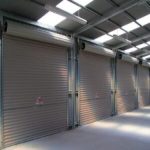
Garage doors include a large movable panel covering a garage’s opening to provide security from potential thieves and protection from the elements.
Benefits: Garage doors offer excellent protection from theft and the elements, enhancing security and safety for properties and vehicles.
Application: Garage doors are suitable for use in residential properties, car repair shops, and commercial buildings that require large access points for vehicles, such as warehouses.
Revolving Doors:
Revolving doors are often found in places with significant foot traffic. They consist of several wing-like partitions that rotate around a central vertical axis.
Benefits: Revolving doors help regulate indoor air quality, improving energy efficiency, and reducing heat loss and air conditioning use.
Application: Revolving doors are recommended for use in high-footfall commercial buildings, such as shopping centres, hospitals, and hotels.
Automatic Sliding Doors:
Automatic sliding doors open and close automatically by sliding horizontally along a track when activated by a motion sensor or a button.
Benefits: Automatic sliding doors offer convenience and accessibility for people with disabilities, whilst also reducing the spread of germs by eliminating the need for people to touch door handles.
Application: Automatic sliding doors are commonly used in hospitals, airports, retail stores, and other commercial buildings with high foot traffic.
Electric Gates:
Electric gates are larger security measures that can be opened and closed automatically with a remote control or keypad.
Benefits: Electric gates provide additional security and privacy, while also enhancing convenience by enabling entry and exit without leaving the car.
Application: Electric gates are suitable for use in residential properties, gated communities, and commercial buildings that require high security, such as data centres.
Disability Accessible Doors:
Disability-accessible doors are designed to provide easy and safe access for people with disabilities through wider entryways, lower handles, and automatic openers.
Benefits: Disability accessible doors enhance accessibility, safety and independence for individuals with disabilities, while also improving safety for all users by reducing the risk of falls and injuries.
Application: Disability accessible doors should be installed in all buildings to ensure accessibility for individuals with disabilities. They are particularly important in public buildings, such as government offices, schools, and hospitals, where accessibility requirements are mandatory under Equality Act 2010.
Six Common Electronic Door Problems and Solutions
There are many different faults that can occur to your electric doors, including sensor degradation, control system malfunction and incorrect settings. This high-tech equipment can be as complex as they are secure. Below, we have outlined six of the most common electric door problems and their solutions.
Unresponsive to Sensors:
Unresponsive sensors are a big issue for electronic doors as it poses a significant safety hazard to users and can potentially lock people in or out of a building. If your electronic doors are experiencing unresponsive sensors, the first thing to do is clean the sensors and make sure there is no debris. You can also check the power source and connections, as well as adjust the sensor’s position so it can better sense movement.
Opening or Closing Independently:
If an electric door is opening and closing on its own, then it could indicate an issue with the sensors, electrical interferences or programming errors. To fix this issue, start by resetting or reprogramming the door’s control system. You can also check for and fix any electrical interferences, and adjust the sensors to see if the positioning is causing the door to open and close independently.
Refusing to Open/Not Staying Open:
There are many reasons why an electric door is refusing to open, including power failure, malfunctioning sensors, broken components, or programming errors. Electric doors that are refusing to open can create a big issue, particularly for businesses. To fix this issue, check that the power source and connections are functioning correctly and make sure to examine the sensors for any signs of damage.
Flashing Codes or Lights:
When electric doors have flashing codes or lights, it means that the door’s control system has detected an error and is displaying a specific sequence of lights or beeps to indicate the issue. Take a look at the user manual or service guide if your electric door has a flashing light or code. There, you can identify the meaning of the code and start troubleshooting a solution, like resetting the door’s control system.
Difficult to Lock:
An electric door that is difficult to lock can be a real security concern for businesses and organisations. It may mean that the door’s locking mechanism is malfunctioning or misaligned, or there is damage to the door’s components. The first thing to do if your electric door is not locking is to check the power source and connections. Make sure to also examine the locking mechanism itself to check for damage, as this can be a common issue for older electric doors following wear and tear.
Not Opening During Fire Alarm Tests:
If an electric door does not open during a fire alarm test, it may in “fail-safe” mode, which can cause the door to remain closed and prevent the spread of fire or smoke
If your electric door is failing to open during a fire alarm test then the easiest fix is to take it out of fail-safe mode via the door’s control system. You can start by checking the door’s control system and ensuring that the door’s emergency unlocking mechanism, such as a manual override or key access, has been correctly installed.
These solutions may not solve the problem, as electric doors are complex pieces of equipment. If you are experience severe issues contact us at Elite Security
Why choose Elite Security as your electronic door repair expert?
If your electric doors need repairing, or your doors have failed occupier safety checks, it is best to bring in the experts. With our extensive knowledge of electric doors, you can rest assured that your security perimeter is in safe hands with Elite Security. From ad hoc work to ongoing maintenance, our services can be tailored to your specific needs.
After choosing our repair service, we will quickly send one of our experienced engineers to diagnose and fix the problem. Additionally, we offer a popular and cost-effective Planned Preventative Maintenance service, so we can catch and prevent future faults before they happen.
Related: How to Add Planned Preventative Maintenance to Your Building
To hear more about our services, including electric door repairs and Planned Preventative Maintenance, use our online contact form to reach a member of our team.